
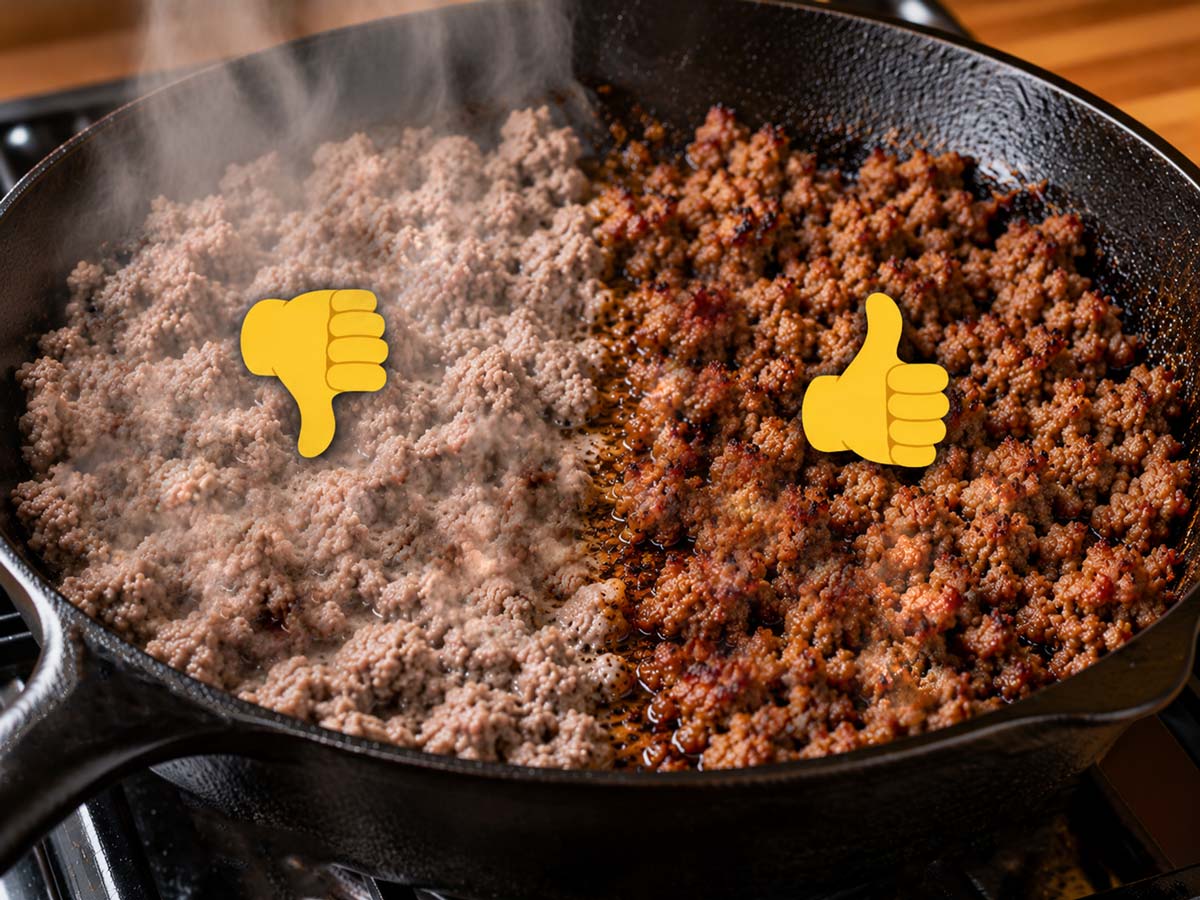
Brown food is good food, and there's some delicious science behind it.
Let's get one thing straight. Gray meat is a culinary crime, the kind that should make you question your life choices.
Whether you're grilling a steak, searing a pork chop, or browning ground beef for chili, one simple principle separates mediocre from mouthwatering meat: Brown food is good food!
Meet Mr. Maillard
In 1912, French chemist Louis-Camille Maillard discovered that when amino acids (the building blocks of proteins) react with certain sugars when exposed to heat, something magical happens.
It's not magic, although your taste buds will disagree; it's just chemistry.
The Maillard reaction produces hundreds of flavorful compounds responsible for the rich, roasted, savory goodness we associate with properly cooked meat. That's why a beautifully seared steak tastes dramatically better than one that's been boiled into submission.
And before someone calls this caramelization, let's clear something up. Caramelization is the browning of sugars through heat. The Maillard reaction involves amino acids reacting with sugars. Different chemistry, different flavors. Both are delicious, but savory crust on your steak is primarily Maillard's handiwork, not caramelization.
That gorgeous brown crust isn't just pretty. It's a flavor factory.
Moisture is your enemy
Here's where many well-intentioned cooks go wrong.
Water boils at 212°F (at sea level), while the Maillard reaction really gets cooking as surface temperatures climb into roughly the 280–330°F range and beyond.
When you chuck cold, wet meat into a crowded skillet, moisture accumulates and the meat essentially steams in its own juices.
Congratulations! You're making gray meat.
The solution? Dry the meat, heat the pan, and give everything room to breathe.
Before you start, pat your meat dry with paper towels. Preheat your skillet or grill. Cook in batches when necessary. And resist the temptation to poke, prod, flip, and otherwise harass that poor steak every six seconds.
Give the surface time to develop a proper crust.
The same goes for ground meat!
Here's a trick that'll change how you brown ground meat.
Instead of immediately diving in and chopping it into a thousand little pieces and stirring it into a steaming pile of gray sadness, divide the meat into large chunks and smash them flat against a hot skillet, like oversized burger patties.
Let them develop a deep brown crust on one side, flip, and brown the other. Then break everything apart with your spatula and finish cooking.
This way you'll get significantly more flavorful browning and less of that sad, boiled-hamburger experience. Your tacos, chili, and spaghetti sauce will thank you.
Brown, not burned or overcooked!
Here's an important distinction: Browning happens on the outside. Doneness happens on the inside.
The Maillard reaction develops flavor on the meat's surface. Internal doneness only about how thoroughly the meat has cooked. A steak can have a gorgeous, deeply browned crust while remaining beautifully pink and juicy inside.
On the flip side (no pun intended), you can cook a steak all the way through without ever developing a good crust. That's how you end up with thoroughly cooked disappointment.
The trick is using sufficiently high heat to brown the exterior without unnecessarily overcooking the interior. And remember, brown is good, but black is bitter, and bitter ain't better.
Use an instant-read thermometer (I recommend a Thermapen® or ThermoPop® – no affiliation) to verify doneness and food safety, especially with ground meat, which should reach 160°F (165°F for ground poultry).
The bottom line
Great cooking isn't always about expensive ingredients, elaborate recipes, or fancy equipment. Sometimes it's about understanding a little chemistry and getting out of the way.
So the next time you're standing over a hot grill or skillet, remember three things:
Dry meat + Hot surface = Beautiful browning (and happy eaters)